Henry VIII’s six wives: who they were, what happened to them and their links to Hampton Court
Divorced, beheaded, died; divorced, beheaded, survived. Henry VIII’s six wives in order, why he married six times, and where to find them at Hampton Court.
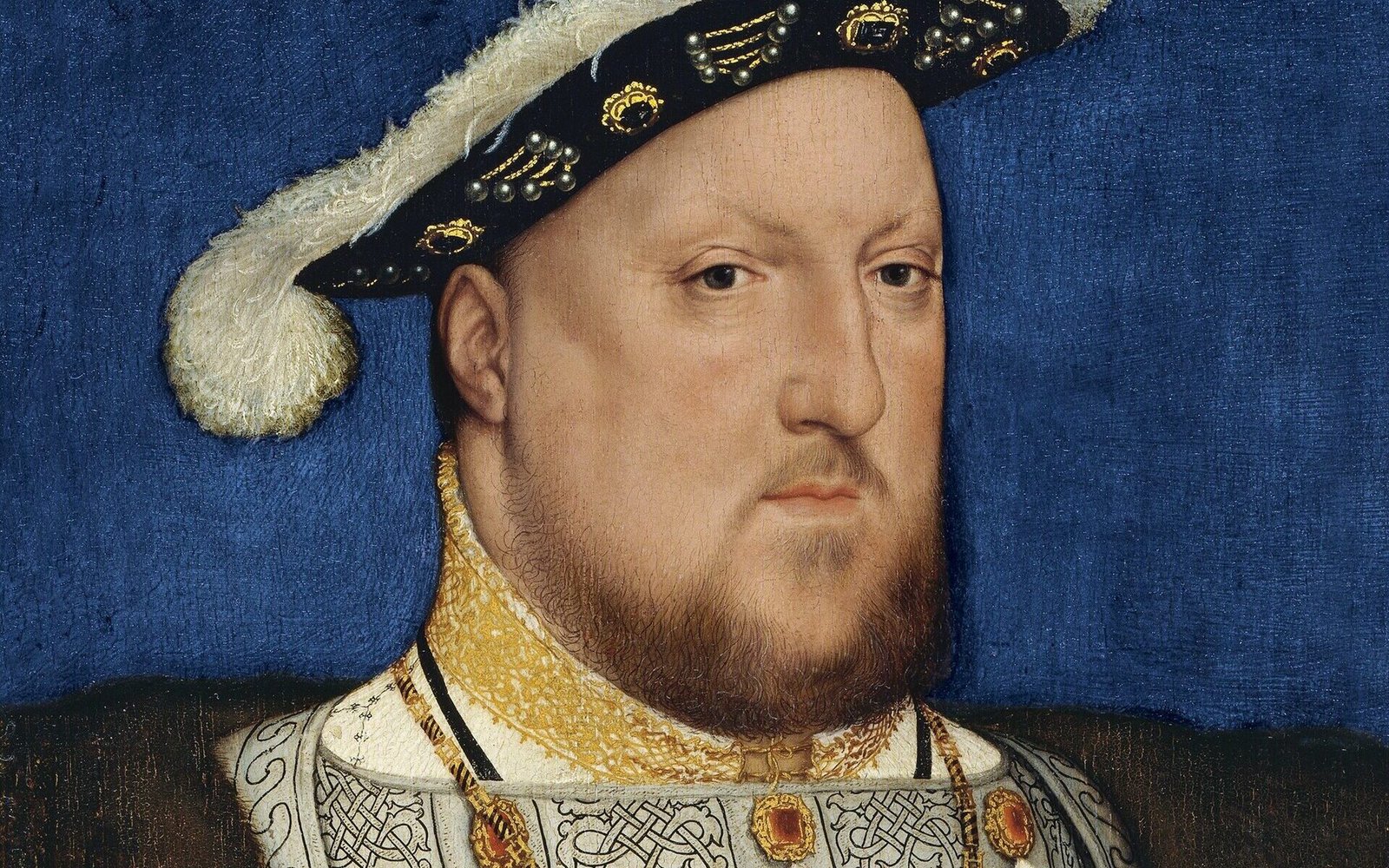
Henry VIII married six times in 38 years. Two of his marriages were annulled, two of his wives were beheaded, one died after giving birth to his only legitimate son, and one outlived him. Every English schoolchild learns the rhyme that sums them up: divorced, beheaded, died; divorced, beheaded, survived. Their stories changed England: the search for a male heir led Henry to break with the Pope and found the Church of England. Hampton Court, his favourite palace, saw a birth, a death, an arrest and a wedding among the six. This guide introduces each queen and links to her full story.
The six wives in order
| Wife | Married | Ended | Fate | Children |
|---|---|---|---|---|
| Catherine of Aragon | 1509 | 1533 | Annulled | Mary I |
| Anne Boleyn | 1533 | 1536 | Beheaded | Elizabeth I |
| Jane Seymour | 1536 | 1537 | Died | Edward VI |
| Anne of Cleves | 1540 | 1540 | Annulled | None |
| Catherine Howard | 1540 | 1542 | Beheaded | None |
| Catherine Parr | 1543 | 1547 | Survived | None with Henry |
Spellings vary: you’ll also see Katherine, Kateryn and Anna. On this site the queens’ own stories use the spellings in our older articles.
1. Catherine of Aragon (married 1509–1533)
The daughter of Ferdinand and Isabella of Spain, Catherine came to England to marry Henry’s elder brother, Arthur. When Arthur died in 1502, she was eventually betrothed to Henry, and they married on 11 June 1509, weeks after he became king. For many years the marriage was happy, and Catherine was a capable queen who ruled as regent while Henry fought in France. But of her six pregnancies only one child survived: Mary, born in 1516.
By the late 1520s Henry was desperate for a son and in love with Anne Boleyn. He argued that his marriage to his brother’s widow had been against God’s law, and asked the Pope for an annulment. The Pope refused, and the “King’s Great Matter” dragged on for six years. In 1533 Archbishop Thomas Cranmer declared the marriage void. Catherine never accepted it. She died at Kimbolton Castle in January 1536. Read Catherine of Aragon’s story and the problems of her marriage.
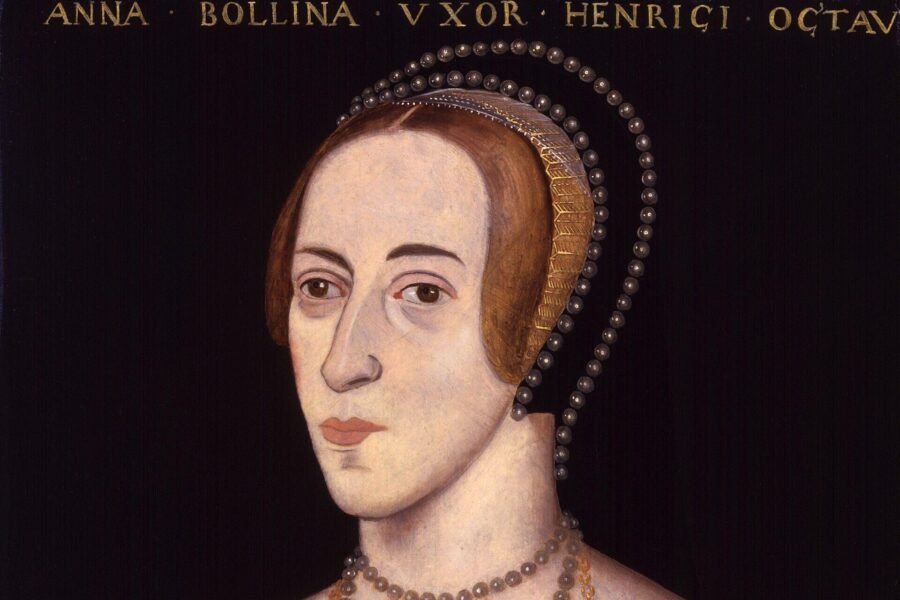
2. Anne Boleyn (married 1533–1536)
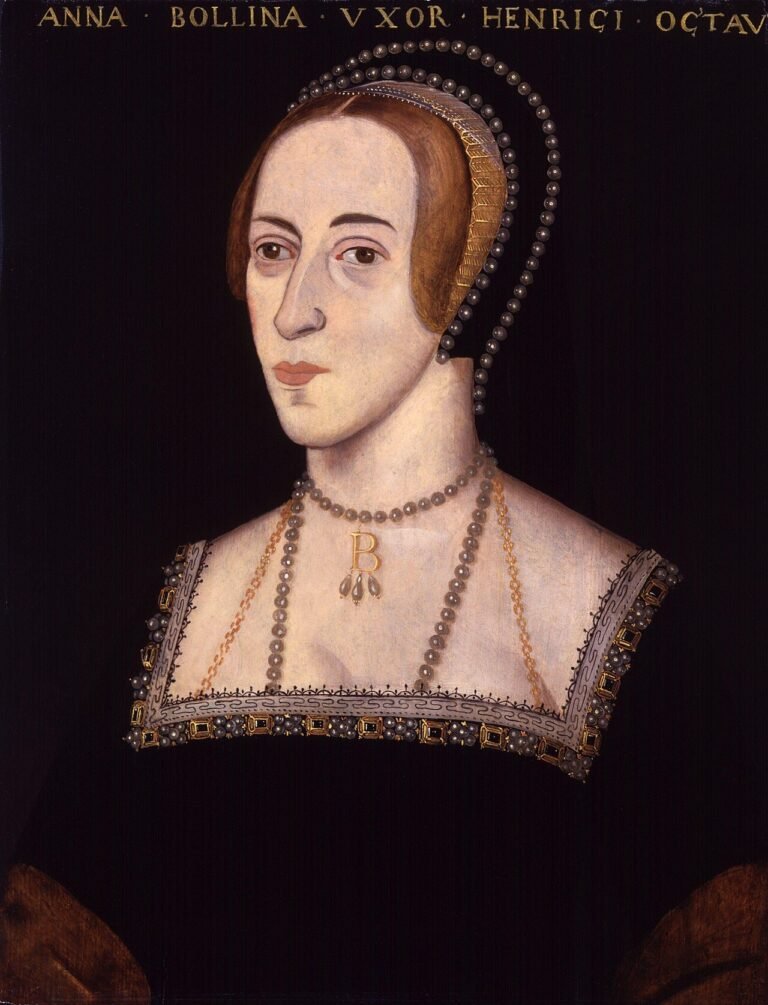
Clever, fashionable and educated at the French court, Anne refused to become Henry’s mistress and held out for marriage. Their pursuit of each other changed the course of English history: to marry her, Henry broke with Rome. They married secretly in January 1533, and Anne was crowned that June. In September she gave birth to a daughter, Elizabeth, not the son Henry wanted.
Hampton Court was being transformed for Anne. The gateway into Clock Court is still called Anne Boleyn’s Gate, and Henry’s and Anne’s initials, entwined, can still be found in the Great Hall, missed when the carvers replaced them after her fall. After miscarriages and a growing court faction against her, Anne was arrested in May 1536, accused of adultery, incest and treason, and beheaded at the Tower of London on 19 May 1536. Read Anne Boleyn’s story.
3. Jane Seymour (married 1536–1537)
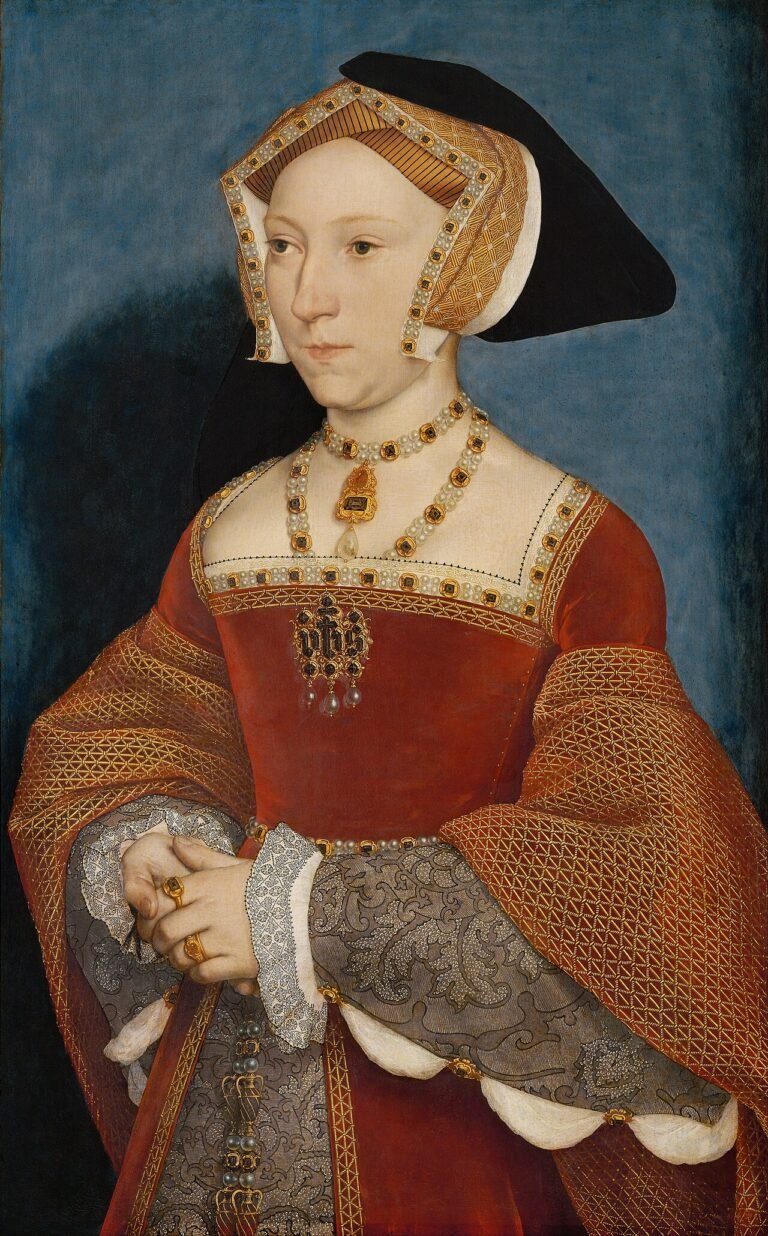
Henry married Jane, one of Anne’s ladies-in-waiting, just eleven days after Anne’s execution. Quiet and conventional where Anne had been brilliant and outspoken, Jane gave Henry what he had wanted for 25 years. On 12 October 1537, at Hampton Court, she gave birth to a son, Edward. He was christened in the palace’s Chapel Royal three days later.
Jane fell ill soon afterwards, probably from an infection after the birth, and died at Hampton Court on 24 October 1537. Henry mourned her more than any other wife and, at his own request, was buried beside her at St George’s Chapel, Windsor. Legend says Jane still walks the Silverstick Stairs on the anniversary of Edward’s birth. Read Jane Seymour’s story and the ghosts of Hampton Court.
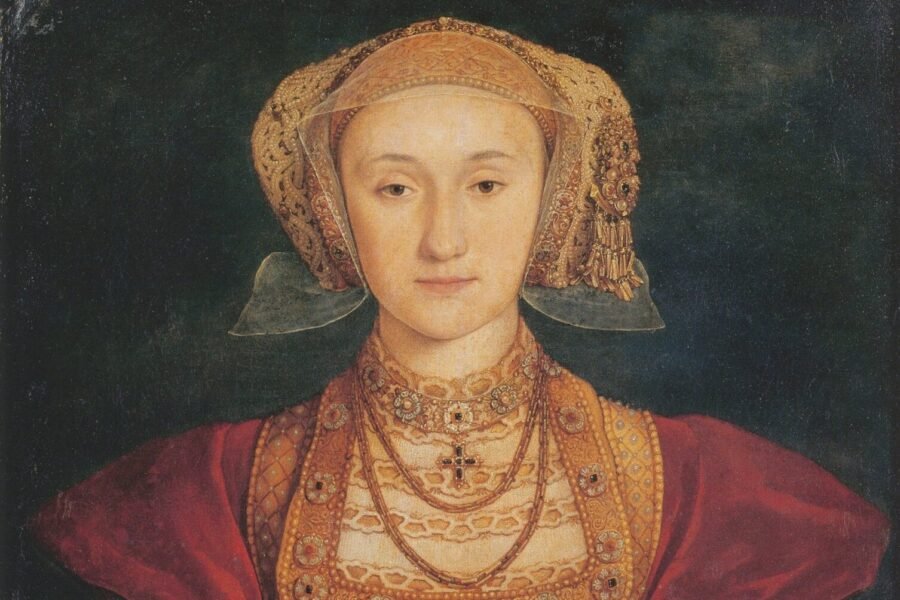
4. Anne of Cleves (married January–July 1540)
Henry’s fourth marriage was diplomatic. His chief minister, Thomas Cromwell, wanted an alliance with the Protestant German states, and Hans Holbein was sent to paint the Duke of Cleves’s sister. Henry liked the portrait but not the woman: after their first meeting he declared “I like her not”. They married on 6 January 1540, but the marriage was never consummated, and it was annulled that July. Cromwell, blamed for the match, was executed.
Anne came out of it best of all. She accepted the annulment, was treated as “the King’s beloved sister”, received houses and an income, and stayed in England. She outlived all of Henry’s other wives, dying in 1557, and is buried in Westminster Abbey. Read Anne of Cleves’s story.
5. Catherine Howard (married 1540–1542)
Catherine was still a teenager, a cousin of Anne Boleyn and one of Anne of Cleves’s maids of honour, when Henry married her on 28 July 1540, the day Cromwell was executed. Henry, nearly 50, overweight and in pain from a leg ulcer, was besotted with his “rose without a thorn”.
In November 1541, at Hampton Court, Henry was given evidence of Catherine’s relationships before her marriage, and of meetings with a courtier, Thomas Culpeper, since. She was confined to her rooms at the palace and later taken to the Tower. Catherine was beheaded on 13 February 1542. According to the most famous of Hampton Court’s ghost stories, she broke free from her guards and ran screaming down what is now called the Haunted Gallery to beg the King for mercy. Read Catherine Howard’s story.
6. Catherine Parr (married 1543–1547)
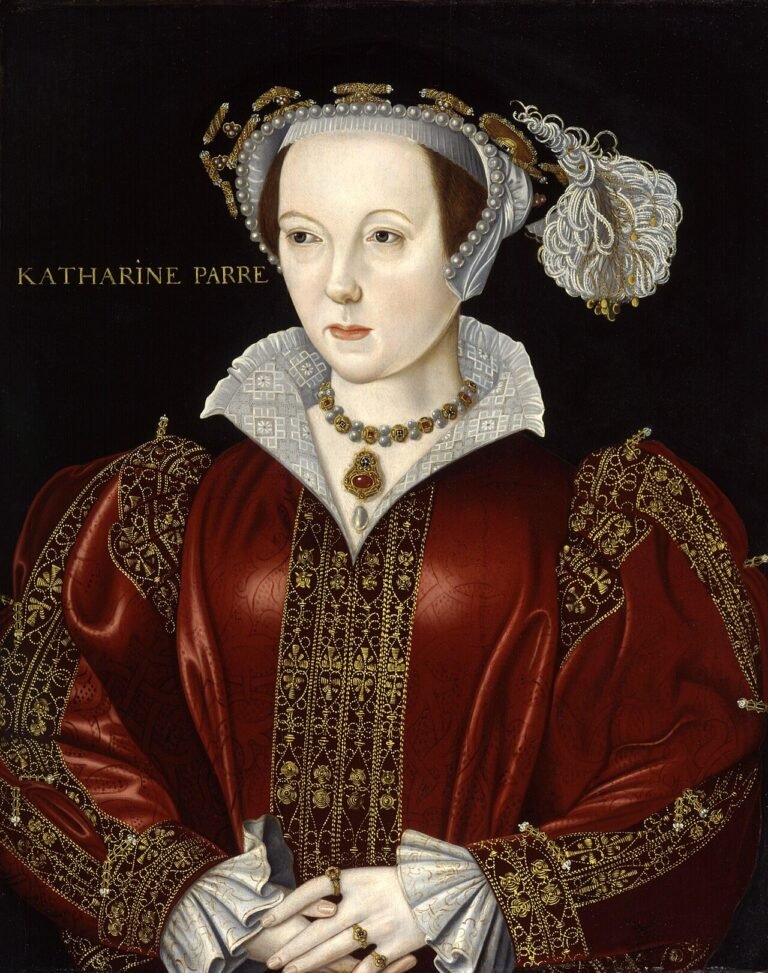
Twice widowed before she married the King, Catherine Parr was intelligent, devout and a published author: the first woman in England to publish a book in English under her own name. She married Henry in the Queen’s Closet at Hampton Court on 12 July 1543, one of the few royal weddings held at the palace. She acted as regent when Henry invaded France in 1544, and brought his three children together at court.
Catherine’s Protestant views nearly cost her everything: in 1546 a warrant was drawn up for her arrest, but she talked Henry round. She outlived him, married her old love Thomas Seymour, Jane Seymour’s brother, and died in 1548 after giving birth to a daughter. Read Catherine Parr’s story. Couples still marry at the palace today: see getting married at Hampton Court.
Why did Henry marry six times?
Above all, for a son. Henry’s father had won the throne in battle after decades of civil war, and Henry believed that only a male heir could keep the Tudor dynasty safe. When Catherine of Aragon failed to give him one, and Anne Boleyn failed too, he was ready to break with the Catholic Church and destroy the people closest to him to try again.
Love, politics and religion played their parts too. Anne Boleyn and Jane Seymour were love matches; Anne of Cleves was a political alliance; Catherine Howard was a middle-aged king’s infatuation; Catherine Parr was a companion for his last years. Each marriage was also a contest between factions at court, especially between religious reformers and conservatives.
Myths about the six wives
- “Divorced” isn’t quite right. Henry never divorced anyone in the modern sense. His marriages to Catherine of Aragon and Anne of Cleves were annulled: declared never to have been valid. So was his marriage to Anne Boleyn, two days before her execution.
- Anne Boleyn’s sixth finger. The story that Anne had six fingers on one hand, and other “witch’s marks”, comes from a hostile Catholic writer, Nicholas Sander, writing decades after her death. No one who knew her mentioned it.
- The “Flanders mare”. Henry is often said to have called Anne of Cleves a “Flanders mare”. There’s no contemporary record of it; the phrase first appears more than a century later. What Henry did say, according to Cromwell, was that he liked her not.
- Jane Seymour and the Caesarean. Rumours soon spread that Edward was cut from his mother. In fact Jane gave birth naturally after a long labour, and died twelve days later, probably of an infection.
- Six wives, one palace. Henry lavished money on Hampton Court, and every one of the six wives stayed there. It’s the best place in England to imagine their world.
Henry’s children
- Mary I (born 1516), daughter of Catherine of Aragon, queen from 1553 to 1558.
- Elizabeth I (born 1533), daughter of Anne Boleyn, queen from 1558 to 1603.
- Edward VI (born 1537 at Hampton Court), son of Jane Seymour, king from 1547 to 1553.
- Henry Fitzroy (born 1519), Henry’s acknowledged illegitimate son by Elizabeth Blount, who died aged 17.
All three legitimate children reigned, and none had children of their own, so the Tudor line ended with Elizabeth in 1603. Read more about Henry VIII’s children.
The six wives at Hampton Court today
Every one of the six wives knew Hampton Court, and you can still find their traces:
- Anne Boleyn’s Gate, between Base Court and Clock Court, and the entwined initials H and A in the Great Hall.
- The Chapel Royal, where Prince Edward was christened in October 1537, days before Jane Seymour’s death.
- The Haunted Gallery, on the route through Henry VIII’s apartments, linked by legend to Catherine Howard.
- Henry VIII’s apartments and the Great Hall, where all six queens would have attended the King.
A palace ticket covers all of these; see our ticket guide for prices. To hear the stories from an expert, a guided tour with afternoon tea covers the Tudor palace. At Kensington Palace, our sister site, you can follow the later royal story in who lives at Kensington Palace.
Questions people ask
Who were Henry VIII’s six wives, in order?
Catherine of Aragon, Anne Boleyn, Jane Seymour, Anne of Cleves, Catherine Howard and Catherine Parr.
Which wives did Henry VIII behead?
Two: Anne Boleyn in 1536 and Catherine Howard in 1542. Both were executed at the Tower of London.
Who was Henry VIII’s favourite wife?
Most historians say Jane Seymour, who gave him his son. Henry chose to be buried beside her at Windsor.
Which wife outlived Henry VIII?
Catherine Parr outlived him as his widow, and Anne of Cleves, whose marriage was annulled, outlived all the others, dying in 1557.
Which of Henry VIII’s wives was married longest?
Catherine of Aragon, for 24 years. Anne of Cleves’s marriage lasted only six months.
Did any of Henry VIII’s wives marry him at Hampton Court?
Yes. Catherine Parr married him in the Queen’s Closet at Hampton Court on 12 July 1543.
Some links on this page earn us a commission at no extra cost to you. How this site makes money